Best Custom Sheet Metal Fabrication Suppliers for Industrial Equipment Makers
 Carl EricksonLast Updated: Nov 12, 2026
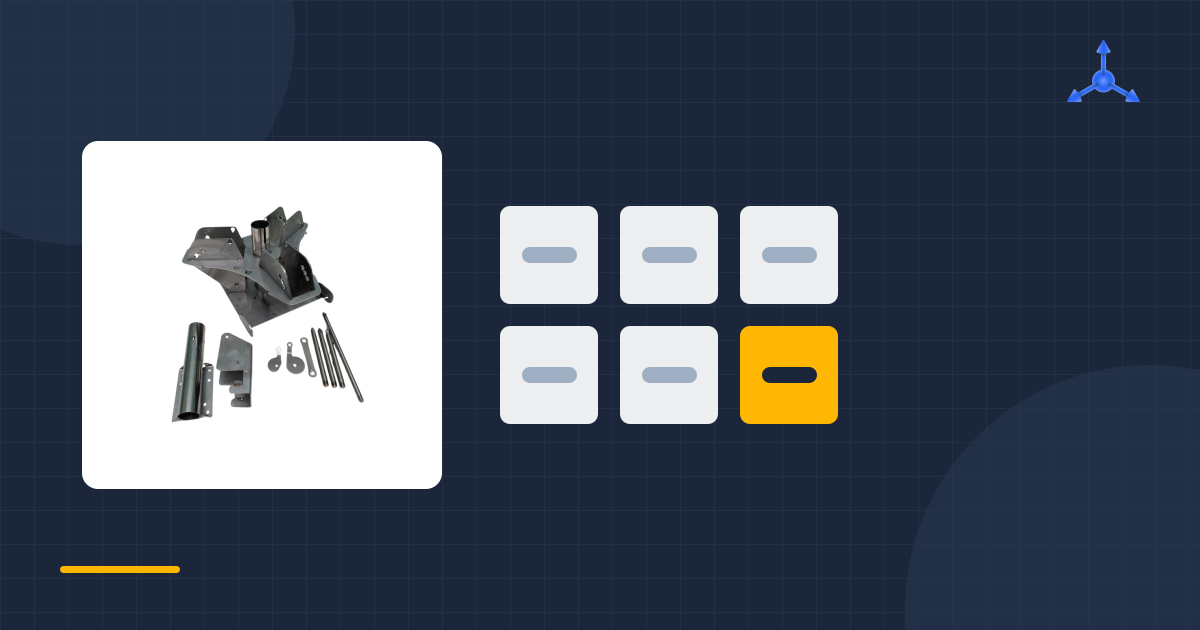
Six custom sheet metal fabrication suppliers are compared here for industrial equipment makers: Komaspec, Xometry, Fictiv, 3ERP, Axis Components and Vector Components, the first five described only in their own published wording as read on 2026-11-02, where each states a different model. On a fabricated assembly, the model decides who owns the fit, not the press brake list.
No price, quality, lead time or capability is attributed to any company here beyond what it publishes about itself. Each of the first five is therefore described in quotation, with the domain and the read date of 2026-11-02 held inside the sentence that makes the claim.
How These Six Sheet Metal Fabrication Suppliers Were Chosen
The list rests on six criteria, each of them answerable from a supplier's own published material:
- Takes custom fabrication from drawings, not catalogue parts only.
- Serves industrial equipment makers, not consumer or architectural work only.
- Handles assembly, not cut and bend alone.
- States its own model plainly, so a buyer can predict who answers the phone.
- Publishes what it does, in enough detail to check the claim.
- Accountable to a named party when a batch comes back wrong.
The third criterion does the most work here. A machined part is finished when it leaves the machine; a fabricated assembly is finished when the last fastener seats, and the cost collects at the joins rather than in the forming.
Neither a machine list nor a price sits among the criteria. A brake, a laser and a welding bay are common to every supplier on this page, so a capability list separates none of them. A quoted number is not comparable either, because the price of a fabricated part follows the flat pattern, the bend count and the finish, and those three change with every revision of the drawing.
| Supplier | How It Describes Itself | Best For |
|---|---|---|
| Komaspec | Contract manufacturer, sheet metal assemblies | Sheet metal and plastic assemblies |
| Xometry | Custom manufacturing on demand | Instant quotes including sheet metal |
| Fictiv | Custom manufacturing, built to scale | Prototype to production scaling |
| 3ERP | Rapid prototyping, low-volume production | Low-volume runs of custom parts |
| Axis Components | Canadian supply partner | Custom precision metal components |
| Vector Components | Authorized representative | Fabricated components, coordinated assembly |
What Each Supplier's Own Site Says About Fabrication and Assembly
The order below is not a ranking of quality. Every entry opens with what the company publishes about itself, attributed and dated, then closes on what a buyer still has to settle at quotation. No entry lists a drawback: what a company cannot do is not something its own page says, so stating it would make the claim ours rather than theirs.
Komaspec
*Best for sheet metal and plastic assemblies.*
Komaspec describes itself as a "Contract Manufacturer for Electro-Mechanical, Sheet Metal and Plastic Assemblies", offering "sheet metal, plastics and assembly from Canadian-owned factories in China, Vietnam and Mexico" (komaspec.com, 2026-11-02).
Read that second phrase as written. It says the factories are Canadian-owned and names the three countries they sit in. It does not say which company owns them, and nothing here extends it.
An enclosure with a folded steel skin, a moulded bezel and press-in fasteners is three processes meeting at one fit. The tolerance that decides whether it closes is not on any single part: springback from the brake and shrink from the mould land in the same gap, and the gap is where a buyer finds out.
A footprint named across three countries makes one question worth asking at quotation. Ask which country runs your part, and whether the repeat order stays there. A flat pattern released to a second plant is a new first article, because brake tooling and operator practice differ even when the drawing does not.
Xometry
*Best for instant quotes that include sheet metal fabrication.*
Xometry describes "Custom Manufacturing On Demand" and lists "instant quotes on CNC machining, 3D printing, sheet metal fabrication, laser cutting" (xometry.com, 2026-11-02). CNC in that wording is Computer Numerical Control.
An instant quote on a folded part is priced from the flat pattern. The number therefore moves with blank area, cut length and bend count rather than with the finished size of the box, and two brackets of the same mass can come back at different prices because one has six bends and the other has two.
Laser cutting sits beside fabrication in that list, which puts the cut edge on the drawing. Specify the edge condition and the finish you expect. A dross-free edge for a painted panel and a weld-prep edge on the same steel are two different requirements, and only one of them is usually assumed.
Upload the flat pattern as well as the folded model where the portal accepts both. A bend that standard brake tooling cannot reach shows up in the flat, not in the solid.
Fictiv
*Best for scaling a fabricated part from prototype to production.*
Fictiv describes "Custom Manufacturing, Built to Scale from Prototype to Production" and offers an instant quote (fictiv.com, 2026-11-02).
In fabrication, scaling usually changes the method of forming. A part folded on a press brake at ten pieces can move to a punched and stamped process at ten thousand, and when it does, the corner relief, the bend radius and the hole positions nearest a bend all move with it.
Springback is the item to settle in writing. The same drawing run in a different temper or on different tooling returns a different included angle, and a four-sided enclosure accumulates that error four times before a single fastener goes in.
Ask which method makes the production run, and at what quantity the switch happens. Then ask for a first article made by the production method rather than by the prototype one, because a sample from the brake tells you very little about a part from a die.
3ERP
*Best for low-volume runs of custom parts.*
3ERP describes itself as a place to source rapid prototypes and custom parts, listing rapid prototyping and low-volume production including CNC machining, vacuum casting and prototype injection moulding (3erp.com, 2026-11-02).
Low volume is where a fabricated part competes with a tooled one. Hard tooling cannot be justified at fifty pieces, so geometry that wants to be stamped gets cut and folded instead, and the cost then sits in programming, setup and the number of distinct operations rather than in the material.
That makes part count the lever a designer actually controls. Folding two brackets into one piece removes a setup, a fastener and an assembly step at the same time, and at fifty pieces those three are most of the price.
Quote the design both ways when the schedule allows it. The difference between one four-bend piece and two two-bend pieces with a joint between them is clearer in two quotations than in any discussion about it.
Axis Components
*Best for a Canadian supply partner on custom precision metal components.*
Axis Components describes itself as a "Canadian supply partner for custom precision metal components", under the homepage heading "Custom Precision Metal Components" (axiscomponents.ca, 2026-11-02).
Precision on a fabricated part has to be pinned to a feature. A tolerance that is routine on a machined face is not routine across a bend, because the brake adds springback and the sheet adds thickness variation, so dimension formed features from a datum that can actually be inspected.
A counterparty in the same time zone changes the revision loop more than it changes the part. An enclosure usually goes through several revisions before release, and each one is a redlined drawing, a regenerated flat pattern and a check that the hardware still seats in the new material thickness.
Ask which features carry the stated precision, and ask for the inspection method with them. A formed feature held in a fixture and the same feature on a surface plate do not always agree, and the disagreement is worth having before the batch is made rather than after.
Vector Components
*Best for fabricated components and coordinated assembly.*
Vector Components is the authorized representative of several leading Chinese manufacturers of industrial components, supporting customers in the Canadian and United States markets. Sheet metal manufacturing and custom fabricated components are listed services. Each factory in the network has an agreement authorizing Vector to serve as its overseas sales department, and parts are made by the partner factories Vector represents rather than in a plant Vector owns or runs.
The work comes in three kinds: customer-designed parts, standard parts batch-made to exact specifications, and off-the-shelf parts sourced as a courtesy. The middle one is the kind buyers of fabricated hardware most often overlook. North American wholesalers stock generic versions, and Vector batch-manufactures for customers whose requirements are more specific.
Vector selects the best manufacturer for each part and process, talks directly with the engineers in charge, coordinates transfer of parts between factories, and supervises inspection, assembly, packaging and shipping. On an assembly that is formed in one plant and finished in another, that transfer is the step where schedules and dimensions usually come apart.
The commercial terms are short. Send Computer-Aided Design (CAD) drawings and specifications and a quotation comes back within one business day, at no cost. Payment terms are NET 30, and standard parts made to exact specification are typically delivered within two weeks.
Industry focus is robotics and automation, oil and energy, medical equipment and automotive — equipment builders rather than consumer or architectural work.
The honest limit. This is not a shop in your city. Parts are made by the partner factories Vector represents, in China, so a factory schedule and an ocean sit between a revised drawing and the next sample. A buyer still moving a bend line week by week is better served by a domestic fabricator, and the model earns its place once the flat pattern is settled and the quantity repeats.
How the Six Sheet Metal Fabrication Suppliers Were Checked
The assessment covered six companies and the six criteria above, applied the same way to each. For five of them the only evidence used was the wording on their own sites, read on 2026-11-02.
| Criterion | Test Applied |
|---|---|
| Custom fabrication from drawings | Drawn work, not catalogue only |
| Industrial equipment makers | Equipment builders, not consumer only |
| Assembly handled | Assembly as well as forming |
| Stated model | Names its own model plainly |
| Published scope | Claim checkable on its own site |
| Named accountable party | A party answers for a batch |
Where a company's own page does not speak to one of the six criteria, this page leaves it as a question rather than filling it in. Three of the criteria are usually answered best on the quotation call: the exact assembly scope, who is accountable for a bad batch, and which plant runs the repeat order.
Two further companies came out of the same research and are described nowhere on this page. Neither site returned readable content when it was fetched, and a company's own words are the only source used here, so there was nothing to quote and nothing worth guessing at.
A homepage is editable, so every quotation above is dated in place. Read each one as a record of what that site said on 2026-11-02 rather than as a standing promise, and check it again before a purchase order goes out.
How to Decide Where a Fabricated Assembly Is Made
The decision turns on where the assembly boundary sits, and it is a procurement question before it is a forming question. Draw that boundary on the bill of materials before asking anyone for a price. Name the parts one supplier delivers as a finished unit, and name the ones you will fit yourself.
A finishing step is where the boundary usually breaks. Plating, powder coat and heat treatment are often done somewhere other than the plant that folded the part, and a factory that cannot perform a step will usually subcontract it and add a commission, which raises the price and creates quality and logistics problems.
So ask who inspects after the finish, and against which document. A coated part is measured for dimension before coating and for appearance after it, and those are two sign-offs rather than one. Agree in advance which of them stops a shipment.
Vector Components coordinates that chain for the parts it represents, and is legally bound to adhere to North American business standards, which gives a buyer legal recourse that a factory abroad does not. For items outside the network, Vector's native Chinese staff track down original sources and negotiate prices, as a courtesy to customers.
Settle the drawing before any of it. A flat pattern that calls out material grade, thickness, bend radii, finish and inserted hardware is quotable by every supplier above; one missing any of those gets a guess, and the guess is priced into the number that comes back.
Then send it. Send us the drawing at contact@vector-components.com. We are in Burnaby, British Columbia, serving Canada first and the United States second.
FAQs
What Should a Sheet Metal Drawing Specify?
Material and grade, thickness, bend radii, tolerance on formed features, finish, and any hardware to be inserted, plus weld symbols wherever parts are joined. A drawing that omits bend radii or finish is a common cause of a re-quote, because the fabricator has to guess at the forming and the coating, and that guess gets priced into the number.
Can One Supplier Handle Fabrication and Assembly?
Some publish both. Komaspec offers "sheet metal, plastics and assembly from Canadian-owned factories in China, Vietnam and Mexico" (komaspec.com, 2026-11-02). Vector Components supervises inspection, assembly, packaging and shipping across the partner factories it represents, which make the parts. Either way, ask who inspects the finished assembly and against which document.
Is Overseas Fabrication Viable for Low Volumes?
It depends on the part more than on the count. Freight and setup are largely fixed, so a short run of a large weldment can pay where a short run of a simple bracket cannot. 3ERP names rapid prototyping and low-volume production in its own wording (3erp.com, 2026-11-02), which is a published answer to the volume question.
How Is Quality Controlled From Canada?
By inspecting at the factory before shipment, against a specification agreed in writing before production starts. Vector Components selects the best manufacturer for each part and process, and supervises inspection, assembly, packaging and shipping. Inspection on arrival finds the same faults weeks later, once the freight has already been paid for.
How Were These Suppliers Chosen?
Against six criteria stated before the list: takes custom fabrication from drawings, serves industrial equipment makers, handles assembly, states its model plainly, publishes what it does, and is accountable to a named party. The five other companies are described only in quotations from their own sites, read on 2 November 2026.
What Is the Difference Between Fabrication and Machining?
Fabrication cuts, forms and joins sheet or plate into a structure. Machining removes material from a solid to a tolerance. Many assemblies need both, and the procurement question is whether one party coordinates the two processes or the buyer manages two suppliers and owns the fit between their parts.
Related Reading

Carl Erickson
Founder and Chief Executive, Vector Components
Carl Erickson is a mechanical engineer and the founder and chief executive of Vector Components. He first went to Shenzhen in 2005 and spent more than fifteen years there building electromechanical products, managing factories and developing supplier networks. Vector Components brings nearly two decades of hands-on manufacturing experience in China to its customers in Canada and the United States.
About Carl EricksonRelated Signals
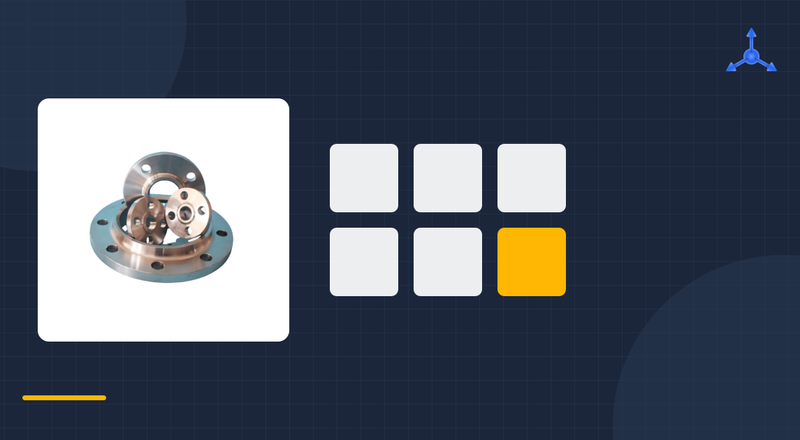
Best Custom Flange and Pipe Fitting Suppliers for Industrial Projects
Carl EricksonTue, Nov 3, 2026
Best China Sourcing Companies for Custom Industrial Components With Quality Control
Carl EricksonMon, Nov 2, 2026
Best Overseas CNC Machining Suppliers for North American Industrial Companies
Carl EricksonMon, Nov 2, 2026