9 Ways to Verify a Chinese Supplier Before You Place an Order
 Carl EricksonLast Updated: Nov 12, 2026
Verifying a Chinese supplier means confirming three things before money moves: that the business legally exists, that it owns the process your part needs, and that it will not subcontract the work. A trading company can answer the first and fail the other two. Ask for the business licence, the process, and the production address.
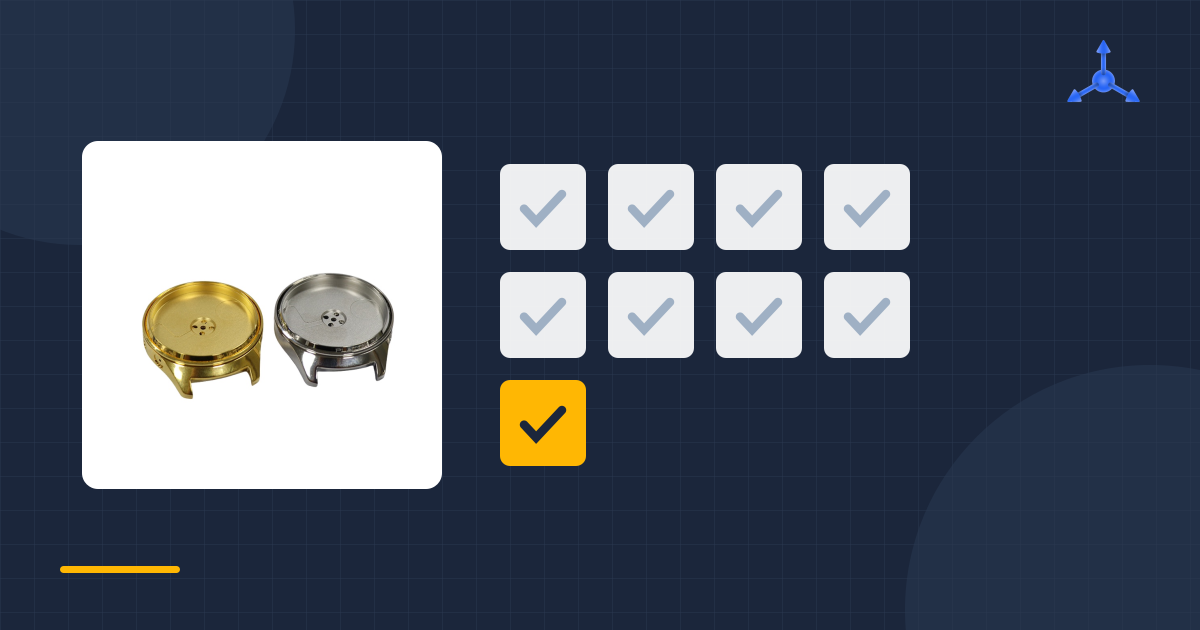
The nine checks run in that order, from paperwork anyone can pull to the one check that needs a person standing on a production floor.
- Read the registered business scope on the licence.
- Match the licence entity to the one quoting you.
- Ask which operations run in-house, machine by machine.
- Ask for the production address, not the office address.
- Ask who makes each part, named part by part.
- Send one technical question only a production engineer can answer.
- Read each certificate's scope against your process.
- Check each certificate's expiry date and holder name.
- Get someone in the room before the first production run.
What Does a Business Licence Actually Prove?
A Chinese business licence proves two things: that a company legally exists, and what it is registered to do. It does not prove capability, and it does not prove the company owns a single machine. Read it for the registered business scope, not for the header.
The scope is the line that separates a manufacturer from a trading company. A manufacturer's scope names production: machining, casting, forging, fabrication of a stated product class. A trading company's scope names trade: import and export, wholesale, distribution.
Match that scope against the process your part needs. If the part needs Computer Numerical Control (CNC) machining, the scope should name machining or the product class, not only trade. A scope that stops at import and export has already answered the question of who makes the part.
Two more fields on the licence are worth reading closely. Registered capital tells you the size of the entity standing behind the order, and the legal representative is the person whose name belongs on the contract. Neither field predicts quality, but both tell you who you are actually dealing with.
Verify the licence against the national enterprise registry rather than the copy you were sent. The registry shows the registration date, the current status of the entity, and the scope as filed, which is the version that counts. A translation supplied by the seller is a convenience, not evidence.
The registration date deserves a minute of its own. A company registered last year while claiming decades of production may be a new entity standing on an older business, which is ordinary, or a different company altogether, which is not.
Then check that the entity on the licence is the entity on your quotation, and the entity your payment will go to. A licence for a company that is not the one invoicing you proves nothing about the company that is. Ask for the licence of whoever signs, in the name they sign in.
How Do You Tell a Factory From a Trading Company?
A factory answers process questions with machines, and a trading company answers them with capabilities. Ask which operations run in-house and which go out, operation by operation. A maker names the equipment, the axis count, the envelope it can hold, and the work it turns away.
Two questions separate a maker from a reseller faster than any document. Ask what they will not quote, because a factory knows the jobs it turns away and a reseller takes everything. Then ask for in-process photographs of a part like yours, with the machine and the fixture in frame rather than a finished part on a table.
Trading is not disqualifying on its own, and plenty of sound parts are bought through a trading company. The question is whether the company you are paying controls the process your part depends on. If it does not, every quality question you ask has to travel one step further than you can see.
Chinese factories often trade under several names, so the name on the quotation may not be the name above the production line. Ask which legal entity will make the part and which will invoice you, and get both in writing. Buying through us means knowing which factory makes the part.
Ask for the production address, not the office address. An office in the city and a plant well outside it is an ordinary arrangement; an office address with nothing behind it is the thing you are checking for. A satellite view and a past bill of lading will usually settle which one you have.
The custom parts we quote are made on CNC lathe, CNC mill, casting and wire electrical discharge machining (EDM). Those are four different kinds of shop. A supplier claiming all four under one roof is making a claim you can check, machine by machine.
Who Actually Makes the Part If the Factory Cannot?
A factory that cannot make a part usually subcontracts it rather than lose the order, and adds a commission. The buyer pays that commission without ever seeing it. The larger cost is quality and logistics: a part made somewhere the quoting factory does not control and cannot inspect.
So ask, per part, which factory makes it. One part, one named maker, stated before the purchase order rather than after the first rejection. A supplier that will not name the maker is telling you where the work is going.
Then put the answer into the order itself. Name the maker in the purchase order, require written notice before any part of the work moves to another plant, and require the first-article inspection report to name the plant that ran the job.
A supplier that signs that clause and honours it has nothing to hide one tier down. A supplier that argues the clause is unnecessary has just told you the work moves.
A buyer should put the same question to us. We select the manufacturer for each part and process, talk directly with the engineers in charge, coordinate the transfer of parts between factories, and supervise inspection, assembly, packaging and shipping.
We do not own or run a factory. The parts are made by the partner factories we represent, and each factory in the network has an agreement authorizing us to serve as its overseas sales department.
The fastest check on this list costs one email. Send a technical question about your part that only the production engineer could answer: a fixture, an order of operations, a tolerance stack. A factory routes it and returns a process answer, while a desk that cannot reach the engineer returns a price and a lead time.
What Do the Certificates Cover, and When Do They Expire?
A certificate covers a named scope, at a named site, for a fixed date range. Those three facts matter more than the logo. Read the scope against the process your part needs, and read the expiry date against today's date.
An International Organization for Standardization (ISO) 9001 certificate is a quality-management certificate, not an approval of your part. It says a documented system was audited within a defined scope. It says nothing about whether the line that will run your part sits inside that scope.
Our partner factories hold ISO 9001, International Automotive Task Force (IATF) 16949 and ISO 14001 certificates, covering CNC machining, pipe fittings and flanges, and investment casting. Ask any supplier the same two questions: whose name is printed on the certificate, and for which scope.
Verify the certificate itself rather than the image of it. Every certificate carries a number and the name of the registrar that issued it, and registrars publish a register you can search. Check the registrar's own accreditation as well, because a certificate from an unaccredited body is a graphic.
Then read the site address on the certificate against the production address you asked for earlier. A group with several plants is often certified at one of them. The certificate is evidence about that address and no other.
A certificate can also be out of date without anyone intending to mislead you. Certification lapses during a transfer between registrars, and a factory that has been recertified will have the current certificate if you ask for it. Ask for the current one, by number.
A management-system certificate is a different question from the standard your part is built to. For pipe fittings we commonly work to Manufacturers Standardization Society (MSS) SP-114 and ISO 4144, or to the customer's own choice of standard. Name the standard on the drawing and the certificate stops carrying weight it was never issued to carry.
Which Checks Can You Not Do From Canada?
Licences, registered scope, certificates and references can all be checked from Canada, at a desk, without a flight. Whether the machines exist, who runs them, and whether the production engineer understood your tolerance cannot. Those checks need someone in the room, and they need the engineer's own language.
Chinese engineers rarely speak English, and factory sales staff rarely have technical training. Our team works with the production engineers in their native language, which is a different conversation from the one a sales desk can hold. Technical questions are lost at that boundary far more often than they are refused.
Carl Erickson, our founder and a mechanical engineer, first went to Shenzhen in 2005 and spent more than fifteen years there building electromechanical products, managing factories and developing supplier networks. Judgment of that kind is not something a buyer can assemble from documents.
A remote check still catches a good deal. Ask for two references in your own country, ask them what went wrong on an order and how it was settled, and compare the engineer's answers across two separate conversations.
So split the list. The first eight checks are paperwork, process questions and one technical email, and a competent purchasing department can run every one of them from Canada. The ninth needs a person on the ground: you travel, you retain an inspection firm, or you buy through a representative who already talks to the production engineers.
We are the authorized representative of several leading Chinese manufacturers of industrial components, working from Burnaby, British Columbia, for buyers in Canada and the United States. We are legally bound to North American business standards, which gives a buyer recourse that a factory abroad does not, and we invoice on NET 30 terms, payable thirty days from invoice.
Send us the drawing. Computer-aided design (CAD) files and specifications come back as a free quotation within one business day.
FAQs
How do I know if a Chinese supplier is a factory or a trading company?
Read the registered business scope on the business licence: a manufacturer's scope names production, and a trading company's names trade. Then ask which operations run in-house, machine by machine. A factory answers with equipment, capacities and the work it turns away, while a trading company answers with capabilities but cannot name the machines, because the work goes elsewhere.
What does a Chinese business licence show?
A Chinese business licence shows legal existence, registered capital, the legal representative and the registered business scope. It proves the company exists and what it is permitted to do, and nothing about capability, tolerance, or whether the firm owns a single machine. Capability has to be verified separately, through process questions and the production address.
Why would a factory subcontract my order?
Because it cannot make that part and does not want to lose the order, so the work goes to another factory with a commission added. The buyer pays that commission without seeing it. The larger cost is quality and logistics: a part made somewhere the quoting factory does not control and cannot inspect.
Are ISO certificates enough to verify a supplier?
No. A certificate names a scope, a site and a date range, so a valid ISO 9001 certificate for one production line says nothing about the line that will run your part, and an expired one says nothing at all. Check the scope against your process and the expiry against today, not the logo.
Can I verify a supplier without travelling to China?
Partly. Licence, registered scope, certificates and references can all be checked remotely, but whether the machines exist, who runs them, and whether the production engineer understands your tolerance cannot. Those checks need someone in the room, speaking to the production engineer rather than the sales desk, which is a different conversation entirely.
What is the single fastest check?
Send a technical question about your part that only the production engineer could answer. A factory routes it and comes back with a process answer: a fixture, an order of operations, a material substitution. A trading company returns a price and a lead time, and the gap between those two replies is the whole verification in one exchange.
Related Reading

Carl Erickson
Founder and Chief Executive, Vector Components
Carl Erickson is a mechanical engineer and the founder and chief executive of Vector Components. He first went to Shenzhen in 2005 and spent more than fifteen years there building electromechanical products, managing factories and developing supplier networks. Vector Components brings nearly two decades of hands-on manufacturing experience in China to its customers in Canada and the United States.
About Carl EricksonRelated Signals