6 Cost Drivers on a Machined Part That Are Not the Material
 Carl EricksonLast Updated: Nov 12, 2026
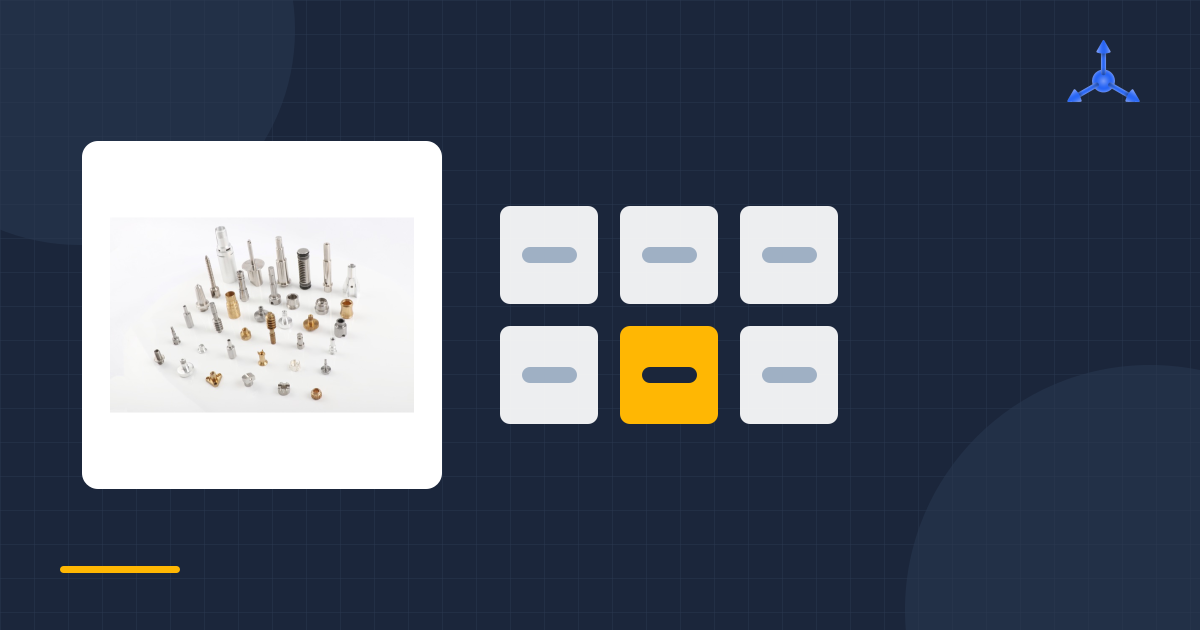
Material is rarely the largest line on a machined part. Six things move the price more: the tolerance band, the number of setups, tool access, surface finish, the inspection requirement, and quantity. Each is a drawing decision, which means each is one a buyer can change before quoting.
What a machined part costs is mostly time: time on the machine, and time under measurement. The six below are the things that set that time.
Why Tolerance Costs More Than Material
Because a tighter band means slower cutting, more finishing passes, and more measurement per part.
A roughing pass removes material fast and leaves a surface nobody would accept. Getting from there to a held dimension takes further passes, each slower than the last, and the last ones remove almost nothing.
A tight band also narrows which machines can hold it and which factories own those machines. That is a availability constraint before it is a price one.
The expensive version of this is a drawing where every dimension carries a tight tolerance. It reads as rigour and functions as noise, because it tells the factory nothing about which features matter.
What Does Each Extra Setup Add?
A fixture, a datum, and a re-measurement.
A setup is one orientation of the part in a machine. The part is held, a datum is established, and everything cut in that orientation is cut relative to that datum.
Turning the part over to reach another face means a new fixture and a new datum. Every dimension that spans the two setups now carries the error of both.
So setups cost money twice: once in time, and once in the tolerance that becomes harder to hold across them. Grouping features onto fewer faces is usually the single biggest saving available on a drawing.
Where Can the Tool Actually Reach?
Into pockets as deep as the tool is long, and no further.
Tool access decides which cutter can be used, and the cutter decides the time. A deep narrow pocket needs a long thin tool, which has to run slowly because it deflects and chatters.
An internal corner radius is the clearest case. A milled internal corner can never be sharper than the smallest tool that fits the pocket, so a radius below any standard tool size forces a slower route or a different process entirely.
That different process is often wire electrical discharge machining (EDM). The processes available for customer-designed parts are computer numerical control (CNC) lathe, CNC mill, casting and wire EDM, and Wire EDM vs Milling: When a Part Needs Each covers when the switch is right.
Thin walls behave the same way. They flex under cutting load, so they get machined in light passes, which takes longer.
Is the Finish Specified or Assumed?
Specified where it matters, and assumed everywhere else, ideally.
A surface finish called out across a whole part can cost more than the machining that preceded it. Finishing operations are slow by nature, and applying one to every face includes faces nobody will ever touch.
Surface roughness is specified as an Ra value in micrometres. Naming it on the faces that seal, slide or locate, and leaving the rest to the general machining finish, is the difference between a finish specification and a finish cost.
A finish named by trade name rather than specification is a separate problem. It needs a question answered before the part can be priced at all.
Who Has to Inspect It, and to What?
Someone does, and the requirement is worth choosing deliberately rather than inheriting.
Vector supervises inspection, assembly, packaging and shipping, and selects the manufacturer for each part and process. The partner factories hold International Organization for Standardization (ISO) 9001, International Automotive Task Force (IATF) 16949 and ISO 14001 certificates, covering CNC machining, pipe fittings and flanges, and investment casting.
A first article inspection requirement is real work: a part measured feature by feature against the drawing before the run commits. It is often worth it, and it is never free.
Asking for one on a part that does not need it is a cost with no return. Not asking for one on a part that does is a different and larger cost later.
Where Does Quantity Change the Route?
At the point where a fixture, a tool or a different process starts paying for itself.
Quantity does not simply discount the same part. It changes which process and which factory suit it, and at some volume a near-net casting beats machining from solid entirely.
Casting or Machining: 6 Questions That Decide Which Is Cheaper at Your Volume works through that properly. The useful habit is to send the real quantity rather than a placeholder, because the route is chosen from it.
What to Change Before You Quote
A pass over the drawing, in this order:
- Loosen the tolerances that do not affect fit or function.
- Group features onto fewer faces.
- Open internal corner radii to a standard tool size.
- Call out finish only where it matters, by specification.
- Decide whether first article inspection is genuinely needed.
- State the real quantity.
None of those six costs anything, and all of them are available before the first quotation.
Send computer-aided design (CAD) drawings and specifications. A quotation follows within one business day, and quotations are free.
Send the drawing.
FAQs
What makes a machined part expensive?
Time on the machine and time under inspection, both of which follow from the drawing rather than the material. Tolerance band, number of setups, tool access, surface finish, inspection requirement and quantity move the figure more than the choice between aluminium and steel does on most parts.
Why does tolerance cost so much?
Because a tighter band means slower cutting, more finishing passes, and more measurement per part. It also narrows which machines and which factories can hold it. Specifying a tight tolerance where the function does not need it is the most common way a drawing prices itself up without gaining anything.
What is a setup, and why does each one add cost?
A setup is one orientation of the part in a machine: a fixture holding it, a datum established, and dimensions cut from that datum. Each new setup needs the part refixtured and re-datumed, which adds time and a chance of error. Features grouped onto fewer faces need fewer setups.
Does surface finish really change the price?
It can exceed the cost of the machining that precedes it, particularly when called out across a whole part rather than on the faces that need it. Specify the roughness where it matters functionally and leave the rest to the general machining finish.
Is machining cheaper in larger quantities?
Per part, usually, but the more useful effect is that volume changes which process and which factory suit the part. At some quantity a cast or near-net route beats machining from solid entirely, which is a different decision rather than a discount on the same one.
What should I change on a drawing to reduce cost?
Loosen the tolerances that do not affect function, group features onto fewer faces, open internal corner radii to a standard tool size, call out finish only where it matters, and state the real quantity. Those five changes cost nothing and are available before the first quotation.
Related Reading

Carl Erickson
Founder and Chief Executive, Vector Components
Carl Erickson is a mechanical engineer and the founder and chief executive of Vector Components. He first went to Shenzhen in 2005 and spent more than fifteen years there building electromechanical products, managing factories and developing supplier networks. Vector Components brings nearly two decades of hands-on manufacturing experience in China to its customers in Canada and the United States.
About Carl EricksonRelated Signals