Aluminium vs Stainless Steel for Machined Parts
 Carl EricksonLast Updated: Nov 12, 2026
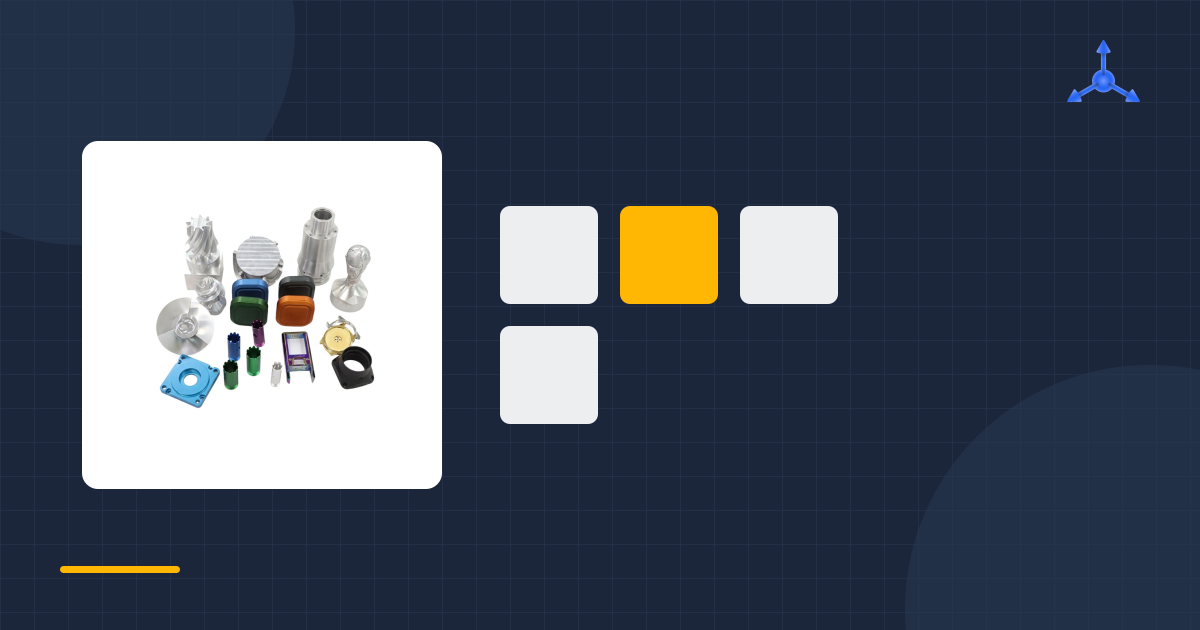
Aluminium cuts faster, weighs less and finishes easily. Stainless steel resists corrosion and carries more load for the same section, but cuts slower and wears tools faster. The service the part has to survive usually decides it before cost does.
Vector Components quotes both. The materials available are aluminium, steel, stainless steel, zinc alloy, copper alloy and engineering plastics, with the grades listed on the machining page.
What Changes Under the Tool?
Cutting time and tool wear, in both cases against the other.
Aluminium is soft and conducts heat well. The chip carries heat away from the cutting edge, tools last, and the machine can move quickly.
Stainless steel does neither. It work hardens, meaning the act of cutting makes the surface ahead of the tool harder than the stock it came from. It also conducts heat slowly, so the heat stays at the cutting edge instead of leaving in the chip.
The practical effect is that feeds and speeds suited to aluminium cause rubbing in stainless, rubbing causes work hardening, and work hardening destroys the tool. Stainless is cut slower deliberately.
Interrupted cuts make this worse. A tool entering and leaving a stainless surface repeatedly gets the thermal cycling and the hardened layer at once.
Which Carries More Load for the Same Part?
Stainless steel, per unit of volume. Aluminium, per unit of weight.
Both halves of that matter, and which one is the constraint decides the answer. Stainless steel is roughly three times stiffer than common structural aluminium for the same cross-section.
Strength is less tidy, and worth stating carefully. Stainless wins on ultimate tensile strength, but a heat-treated aluminium such as 6061-T6 has a higher yield strength than annealed 304, so "stronger" depends entirely on grade, temper and which strength is governing.
But it is also about three times as dense. So a part redesigned in aluminium to the same stiffness is usually physically larger and still lighter overall.
If the constraint is space, that redesign may not fit and stainless wins. If the constraint is mass, aluminium usually wins even after the section grows.
Neither conclusion survives a part where the load is not the governing requirement, which is more common than it sounds.
Which Survives the Service?
Stainless steel, wherever a coating would be the only thing protecting the part.
Stainless resists corrosion through a chromium oxide layer that re-forms when damaged. That self-healing property is the whole point: a scratch does not start a corrosion site.
Aluminium also forms a protective oxide, but it is thinner and far less tolerant of chlorides. In salt water or a wash-down environment, bare aluminium does not last.
Anodising or painting changes that, which makes aluminium viable outdoors where the coating will not be abraded. Where it will be, the coating becomes a maintenance item rather than a solution.
Grade matters here more than family. The machining page lists the grades, and the difference between two stainless grades in a chloride environment can be larger than the difference between stainless and aluminium in a dry one.
Which Finishes Better?
Aluminium and stainless steel finish differently rather than one finishing better.
Aluminium takes anodising, which builds a hard protective oxide that can also be coloured. That is both a functional and a cosmetic finish, and it is a genuine advantage where appearance matters.
Stainless steel is not anodised. It is usually passivated after machining, which restores the chromium oxide layer that cutting disturbed, or left as machined where appearance does not matter.
Machined stainless also takes a mechanical polish well, which is why it appears in food and pharmaceutical equipment. That is a finishing operation with its own cost, covered in 6 Cost Drivers on a Machined Part That Are Not the Material.
Which Should You Specify?
Work in this order: service, then weight, then cutting cost.
Service first. If the part will see salt water, chlorides or wash-down, stainless steel unless there is a specific reason not to. If it is dry and indoors, aluminium is usually fine.
Weight second. If mass is the governing constraint, aluminium, and accept a larger section.
Cutting cost third, because it is usually the smallest of the three. On most parts the tolerance band and the number of setups move the price more than the material does.
Then state the grade rather than the family. A drawing naming "stainless" leaves the choice to someone optimising for stock availability, which may not be optimising for your service.
Sometimes neither is the answer. The materials list is wider than these two: steel, zinc alloy, copper alloy and engineering plastics are all machined, with grades on the same page.
Corrosion resistance without the weight, electrical conductivity, or running against another metal without galling are each a reason to look at that wider list. A part fighting the aluminium-or-stainless choice is occasionally a part that wants a third material.
Vector selects the manufacturer for each part and process, and parts are made by the partner factories Vector represents. Send computer-aided design (CAD) drawings and specifications with the service conditions, and a quotation follows within one business day. Quotations are free.
Send the drawing and what the part has to survive.
FAQs
Is aluminium or stainless steel cheaper to machine?
Aluminium, as a rule, because it cuts faster and wears tools more slowly, so the machine spends less time on each part. That advantage can disappear on a part whose cost is driven by tolerance or setups rather than cutting time, which is more often the case than the material comparison suggests.
Is stainless steel stronger than aluminium?
Per unit of volume, yes, in both stiffness and strength. Per unit of weight, aluminium usually wins, which is why a part redesigned in aluminium often ends up physically larger and still lighter overall. Which comparison matters depends on whether the constraint is space or mass.
Why is stainless steel harder to machine?
It work hardens: the act of cutting makes the surface ahead of the tool harder, so feeds and speeds that suit aluminium cause rubbing and rapid tool wear in stainless. It also conducts heat away more slowly, which concentrates heat at the cutting edge rather than in the chip.
Can machined aluminium be anodised?
Yes, and it is a common finish because the oxide layer anodising builds is both protective and decorative. Stainless steel is not anodised; it is usually passivated to restore its chromium oxide layer after machining, or left in the as-machined condition where appearance does not matter.
Which should I specify if the part is outdoors?
Usually stainless steel, because its corrosion resistance does not depend on a coating that can be damaged. Aluminium outdoors works where it is anodised or painted and where the coating will not be abraded. State the exposure on the drawing and the grade can follow from it.
Related Reading

Carl Erickson
Founder and Chief Executive, Vector Components
Carl Erickson is a mechanical engineer and the founder and chief executive of Vector Components. He first went to Shenzhen in 2005 and spent more than fifteen years there building electromechanical products, managing factories and developing supplier networks. Vector Components brings nearly two decades of hands-on manufacturing experience in China to its customers in Canada and the United States.
About Carl EricksonRelated Signals
Casting or Machining: 6 Questions That Decide Which Is Cheaper at Your Volume
Carl EricksonMon, Nov 2, 2026