Ordering Ball Valves to Spec Instead of Taking Stock
 Carl EricksonLast Updated: Nov 12, 2026
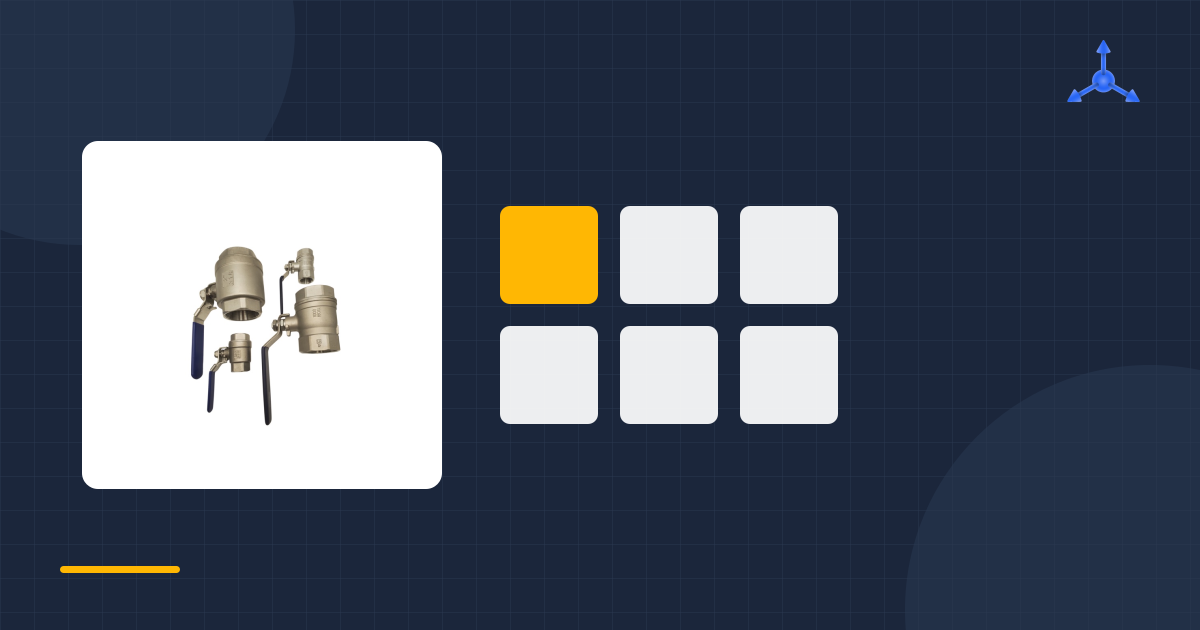
Ball valves can be made to a specification rather than taken from stock, which matters when the seat material, end connection or pressure rating on a generic valve does not match the service. Vector Components quotes valves against the buyer's drawing through the partner factories it represents.
North American wholesalers stock generic versions, and for most jobs a stocked valve is the right answer. This page is about the jobs where it is not.
When Is a Stocked Ball Valve the Wrong Answer?
When one field on the datasheet rules it out, which is usually the seat.
A stocked valve is specified for the widest market that will buy it. That is a sound commercial decision and it means every parameter is a compromise: a seat material that tolerates most temperatures, an end connection that suits most lines, a rating that covers most pressures.
Three things commonly break that compromise. The first is a medium or temperature the standard seat cannot take.
The second is an end connection the line does not use, and the third is a pressure rating above what the stocked range covers.
Any one of those turns a catalogue purchase into a specification. The rest of the valve may be entirely ordinary.
Vector batch-manufactures for customers with more specific requirements. That is the second of three kinds of work: customer-designed parts, standard parts batch-made to exact specifications, and off-the-shelf parts sourced as a courtesy.
Which Fields Have to Be on the Drawing?
Seven, and most of them follow from the service rather than from preference.
Body construction. One-piece, two-piece or three-piece, which decides whether the valve can be serviced in place.
Seat material. Set by temperature and medium, and the field that most often forces the order.
Stem arrangement. Including whether it is blowout-proof, which many specifications require.
End connection. Threaded, socket weld, butt weld or flanged, matching the line rather than the catalogue.
Bore. Full bore for unrestricted flow and pigging, reduced bore where pressure drop is acceptable.
Pressure and temperature rating. The service conditions, not a nominal class.
Actuation. Whether the valve is hand-operated or takes an actuator, because the mounting pad and stem have to suit it.
Send the line conditions alongside the drawing. Medium, temperature and pressure let most of the seven be answered correctly rather than guessed.
Why Does Seat Material Decide So Much?
Because the seat is what seals, and the service rules most seat materials out before anything else is chosen.
A ball valve closes by rotating a ball against a seat. The ball is metal and durable. The seat is softer, it does the sealing, and it is the part that fails.
Temperature sets the first limit. A seat that is fine at ambient may creep or soften at process temperature, and the valve starts passing without any visible damage.
The medium sets the second. Solvents, oxidisers and some process chemicals attack specific polymers, and a seat chosen for general service may not survive a specific one.
That is why a stocked valve's seat is the most common reason to order to specification. The body and ball are usually fine; the seat was chosen for a different job.
Spec, Stock or Sourced?
Three routes, and being clear about which one you are on saves a round trip.
Specification. The valve is made to the drawing by the partner factories. This is the route when one of the seven fields above does not match a stocked option.
Standard to specification. A standard valve batch-made to exact specification, which covers the case where the configuration is ordinary but not stocked in the quantity or variant needed.
Sourced as a courtesy. Off-the-shelf parts are sourced as a courtesy for customers already ordering made-to-order work. Vector's native Chinese staff track down original sources and negotiate prices for items outside the partner network.
That third route is a convenience rather than a catalogue business. It exists so a buyer ordering custom valves does not have to open a second supplier for the ordinary items on the same line list.
What to Send for a Valve Quote
The line conditions and the drawing: medium, temperature, pressure, the end connection the line needs, the bore requirement, and whether the valve will be actuated.
Seat material follows from temperature and medium, so sending those two is often more useful than naming a seat.
Standard parts made to exact specification typically ship within two weeks. Seat material and end machining move that more than the body does, and the quotation carries the lead time for the specific build.
Send computer-aided design (CAD) drawings and specifications. A quotation follows within one business day, quotations are free, and payment terms are NET 30.
Parts are made by the partner factories Vector represents. Vector does not own or run a factory.
Send the line conditions.
FAQs
Can ball valves be made to my own specification?
Yes. Valves are quoted against the buyer's drawing through the partner factories, covering body construction, seat material, stem arrangement, end connection, bore and rating. The usual reason to go this route is that a stocked valve's seat material or end connection does not suit the service, rather than anything about the valve body.
What do you need to quote a ball valve?
The line conditions and the drawing: medium, temperature, pressure, the end connection the line needs, bore requirement, and whether it will be actuated. Seat material follows from temperature and medium. Send drawings and specifications and a quotation follows within one business day, at no cost.
Why does seat material matter more than the body?
Because the seat is what seals, and temperature and medium rule most seat materials out before anything else is chosen. A stocked valve carries the seat that suits the widest range of buyers, which is a reasonable default and frequently the wrong one for a specific service.
How long does a custom ball valve order take?
Standard parts made to exact specification typically ship within two weeks. Seat material and end machining move that more than the body does. The quotation carries the lead time for the specific build rather than a general figure, because the combination changes which factory runs it.
Do you supply off-the-shelf valves as well?
Off-the-shelf parts are sourced as a courtesy alongside the two kinds of made-to-order work. Vector's native Chinese staff track down the original sources and negotiate prices for items outside the partner network. It is a convenience for customers already ordering made-to-spec parts rather than a catalogue business.
Is a one-piece or two-piece body better?
They suit different cases rather than ranking against each other. The choice follows from whether the valve needs to be serviced in place, the pressure rating required, and the space available. State the service requirement on the drawing and the construction follows from it.
Related Reading

Carl Erickson
Founder and Chief Executive, Vector Components
Carl Erickson is a mechanical engineer and the founder and chief executive of Vector Components. He first went to Shenzhen in 2005 and spent more than fifteen years there building electromechanical products, managing factories and developing supplier networks. Vector Components brings nearly two decades of hands-on manufacturing experience in China to its customers in Canada and the United States.
About Carl EricksonRelated Signals