Is Sand Casting the Right Process, and Can the Network Do It
 Carl EricksonLast Updated: Nov 12, 2026
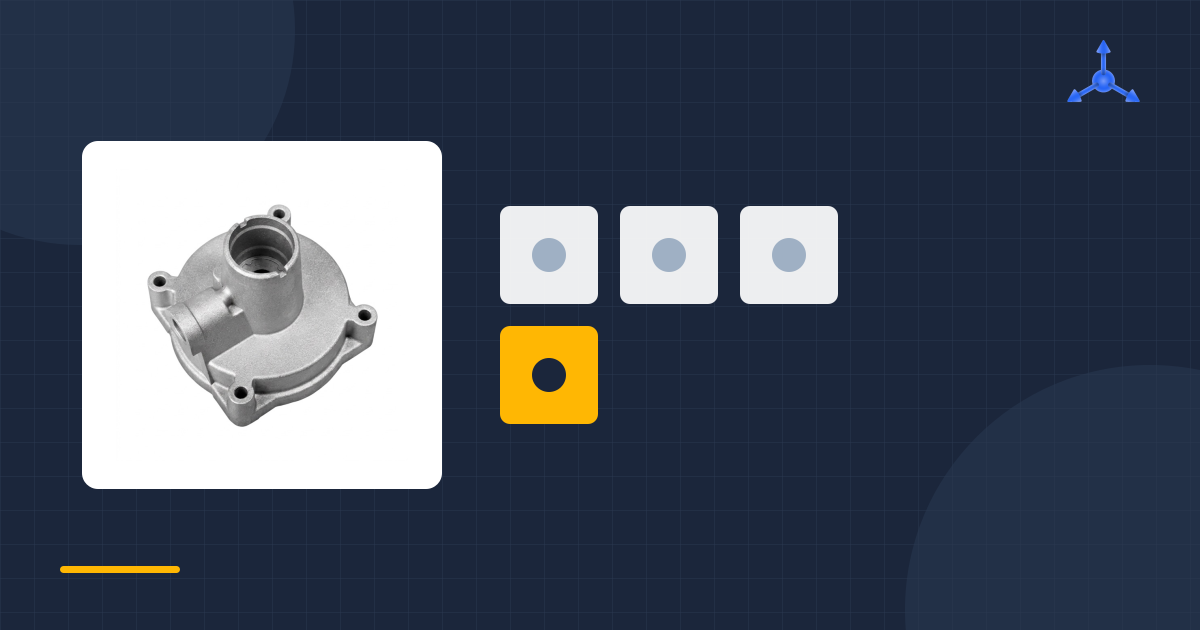
Sand casting suits large, low-volume parts where a rougher surface and a looser tolerance are acceptable. It is available through the partner factories Vector Components represents, though it is not typical for the scale of Vector's projects. For detail and repeat volume, investment or die casting usually fits better.
That is the honest answer to both halves of the question, and the rest of this page is the reasoning. Some readers will finish it and go elsewhere, which is the right outcome if the part needs a foundry that does nothing but large sand work.
What Does Sand Casting Do Better Than the Alternatives?
Size, and low quantities.
A sand mould is bonded sand packed around a pattern. The pattern is wood, plastic or metal, and it costs a fraction of a wax tool or a hardened steel mould. That is the whole economic argument.
It means a large part can be made in ones and twos without paying for tooling that only volume recovers. A one-off housing a metre across is a sand casting almost by default, because no other route makes sense at that size and quantity.
The mould is destroyed to release each part, so every casting comes from a fresh mould. That is why dimensions vary more than a tool-made part, and also why size is not the constraint it is elsewhere.
Pattern material is the lever worth asking about. Wood is cheapest and wears with each moulding, so it suits a handful of parts. Resin or metal costs more and holds its dimensions across a longer run, which matters once the quantity passes the point where a worn pattern starts showing up in the castings.
Die Casting vs Investment Casting for Custom Industrial Parts covers the two tooled routes against each other, which is a different decision from this one.
Where Does It Stop Being the Right Answer?
At tolerance, at surface finish, and at thin sections.
Investment casting holds closer dimensions because the ceramic shell forms around a wax pattern rather than being packed by hand. If the drawing has tight tolerances across several features, sand casting will need machining to reach them.
Surface finish follows the sand. A face that has to seal, slide or look finished is going to be machined whatever the casting route, but sand casting starts further away.
Thin sections are the third limit. Bonded sand draws heat out unevenly, and a thin web that fills easily in a pressurised steel mould may not fill at all.
The practical consequence is a machining allowance: extra material designed onto the faces that have to hold a dimension, cut off afterwards. That is normal rather than a failure, but it is a second operation and belongs in the plan from the start.
Can Vector Route a Sand Casting Through Its Network?
Sand casting is available through the partner factories, though not typical for the scale of Vector's projects.
The listed casting services are die casting and investment casting. Sand casting sits outside that list, available through the network rather than offered as a line item, and it is worth being plain about the difference.
Vector does not own or run a factory. The partner factories make the part, and each factory in the network has an agreement authorizing Vector to serve as its overseas sales department.
That matters here more than usual. A factory that cannot make a part usually subcontracts it and adds a commission, which raises the price and introduces quality and logistics problems the buyer never sees. An atypical process is exactly where that risk sits.
So the answer on a sand casting is not a reflexive yes. Send the drawing and the quantity, and the honest answer about routing it comes back with the quotation.
What to Send, and When to Ask About Something Else
A drawing with the overall size, the material, the quantity, and which faces have to hold a dimension.
The quantity matters more than usual, because it is half of what makes sand casting the right process. A part wanted in twos stays a sand casting; the same part wanted in thousands probably should not be.
If the part is small, detailed and repeating, say so and the conversation should move. How to Choose an Investment Casting Supplier is the better starting point for that part, and hearing a no on sand casting early is cheaper than hearing it after a pattern has been made.
Send computer-aided design (CAD) drawings and specifications, and a quotation follows within one business day. Quotations are free.
Vector supervises inspection, assembly, packaging and shipping, and selects the manufacturer for each part and process. On a sand casting that goes on to be machined, the inspection stage is worth naming before the pour, because a defect found after the allowance is cut costs both operations.
Send the drawing and the quantity.
FAQs
Does Vector Components offer sand casting?
It is available through the partner factories, though it is not typical for the scale of Vector's projects. The listed casting services are die casting and investment casting. If a part genuinely needs sand casting, say so with the drawing and the quantity, and the honest answer about routing it comes back with the quotation.
When is sand casting the right choice?
When the part is large, the quantity is low, and a rougher surface with a looser tolerance is acceptable. The pattern costs far less than a wax tool or a hardened steel mould, so a handful of big parts can be made without the tooling that investment or die casting would require first.
What tolerance can sand casting hold?
Looser than investment casting, which is the main reason to choose between them. Rather than quote a figure that depends on the foundry, the pattern and the part, design a machining allowance onto the faces that have to hold a dimension and treat the as-cast surface as a starting point.
Why does a sand casting need a machining allowance?
Because the mould is broken away from every part, so the as-cast surface and dimensions vary more than a tool-made part. Adding material where a face has to seal or locate means the dimension is cut rather than cast, which is how a loose process still produces a part that fits.
Sand casting or investment casting for a repeating part?
Investment casting, in most cases. Once a part repeats, the wax tool is spread across the run and the closer tolerance removes machining operations. Sand casting keeps its advantage where the part stays large or the quantity stays small, which is a narrower case than it first appears.
Related Reading

Carl Erickson
Founder and Chief Executive, Vector Components
Carl Erickson is a mechanical engineer and the founder and chief executive of Vector Components. He first went to Shenzhen in 2005 and spent more than fifteen years there building electromechanical products, managing factories and developing supplier networks. Vector Components brings nearly two decades of hands-on manufacturing experience in China to its customers in Canada and the United States.
About Carl EricksonRelated Signals