How to Choose an Investment Casting Supplier
 Carl EricksonLast Updated: Nov 12, 2026
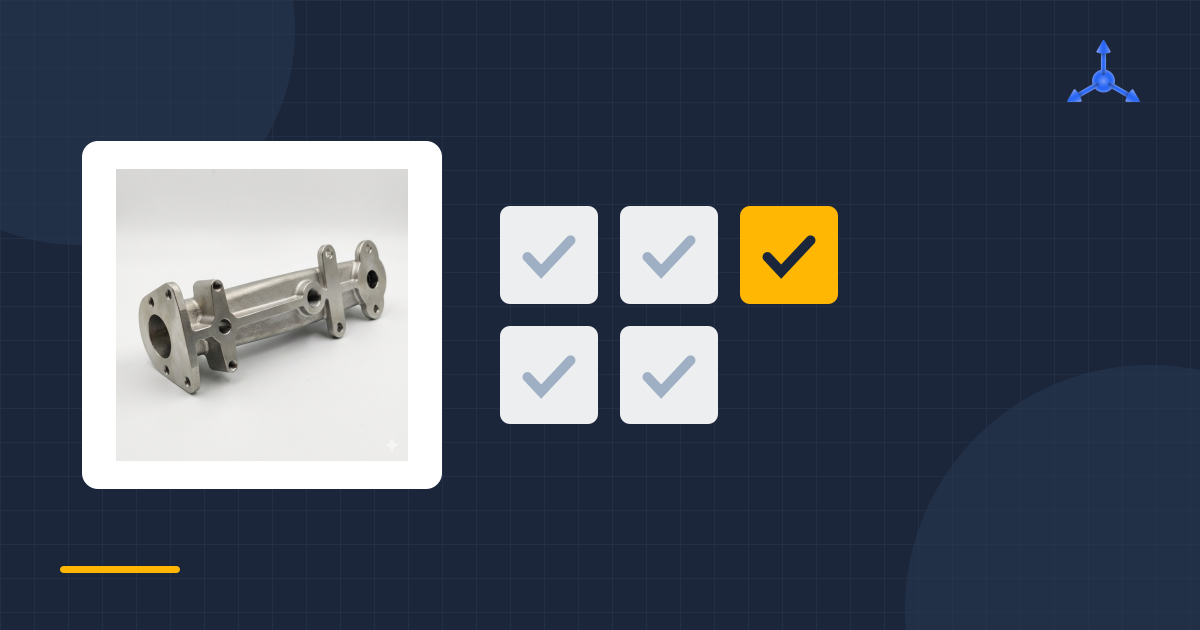
Choosing an investment casting supplier comes down to five checks: whether the process suits the part at all, who owns the tooling, at which stage parts are inspected, which standards the foundry actually holds, and whether the volume covers the tooling. Vector Components represents partner factories whose certification covers investment casting.
Those five are in the order they decide things. The first can rule out the process entirely, and the last decides whether the economics work. The three in the middle are where orders go wrong.
Does the Part Suit Investment Casting at All?
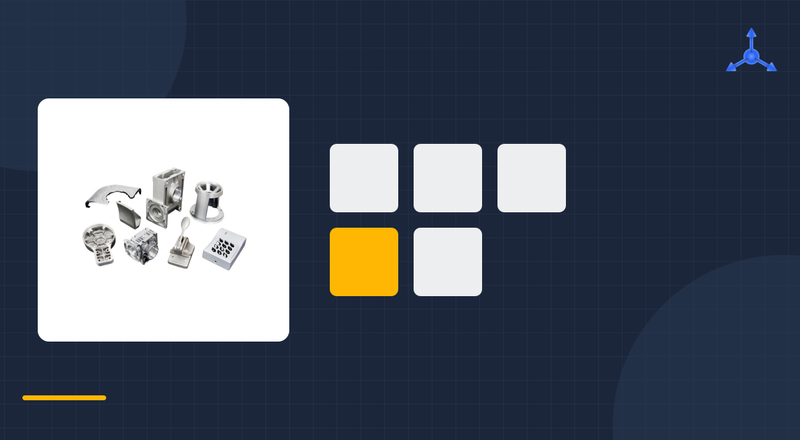
Investment casting coats a wax pattern in a ceramic shell, melts the wax out, and fills the cavity with metal. That route holds closer tolerances and finer detail than packing sand around a pattern, and it costs a wax tool before the first part exists.
So the process suits parts with detail, thin sections and dimensions that have to repeat. It suits them best when there will be more than a handful.
Sand casting is the alternative at the other end. It is available through the partner factories, though it is not typical for the scale of Vector's projects, and it earns its place on large parts in low quantities where a rougher surface is acceptable.
Die casting is the third route, and the decision between it and investment casting is its own question. Die Casting vs Investment Casting for Custom Industrial Parts answers that one rather than repeating it here.
If the part is large, simple and wanted in ones and twos, investment casting is probably the wrong answer and worth saying so early.
Who Owns the Tooling After the First Order?
Tooling ownership decides whether a second order can move, and it is rarely volunteered.
A wax tool is cut before any part exists. Once it exists, whoever owns it controls where the part can be made. If the answer was never written down, the practical answer is the factory holding it.
Vector Components does not own or run a factory. The partner factories make the part, and each factory in the network has an agreement authorizing Vector to serve as its overseas sales department.
That means the tooling question has a named party to answer it, which is different from a quotation portal where the tool exists somewhere in a supply chain nobody will describe.
Settle it on the purchase order rather than in correspondence. Say who owns the tool, who stores it, who maintains it, and what happens to it if the programme ends.
A buyer who skips this discovers it at the worst possible moment: when a factory's lead time has stretched and the obvious answer is to move the part somewhere else.
At Which Stage Are Castings Inspected?
Before the machining allowance is cut away, wherever possible.
A casting usually arrives with extra material on the faces that have to hold a dimension. That allowance is machined off afterwards. A void or an inclusion under the surface is invisible until the cut opens it up.
Finding that defect at the foundry costs a casting. Finding it after a machining operation costs the casting and the machining, and on an assembly it can cost the schedule.
Vector supervises inspection, assembly, packaging and shipping, and selects the manufacturer for each part and process rather than sending everything to one plant. On a casting that goes on to be machined, those are two different factories and the handover between them is where the inspection stage has to be named.
Agree the stage before production starts. First article, in process, final, or some combination, stated on the order.
Does the Certificate Cover Casting?
Certificate scope is the casting-specific version of a question worth asking any supplier, and scope is the part that matters here.
The partner factories hold International Organization for Standardization (ISO) 9001, International Automotive Task Force (IATF) 16949 and ISO 14001 certificates, and the coverage includes investment casting alongside computer numerical control (CNC) machining, pipe fittings and flanges.
Casting is the detail to check rather than assume. A supplier network can be certified across machining and fabrication and have nothing covering a foundry, because a foundry is a different site with different processes and usually a different legal entity.
So the question on a casting is not whether certificates exist. It is whether a certificate's scope names casting, and whether the entity holding it is the entity that will pour your part.
Those certificates belong to the factories. Vector Components holds no certification of its own, and a supplier that blurs that distinction is worth a second question.
Who Checks the Parts? 5 Quality Questions to Settle Before Manufacturing in China covers how to read a certificate properly, and the inspection regime that matters more than the certificate does.
Does the Volume Cover the Tooling?
The tooling is a fixed cost. It does not change with the order size, which makes volume the figure that moves the answer most.
A part ordered once carries the whole tool. The same part ordered through a year of production carries a fraction of it per piece. Nothing else in the quotation has that shape.
This is also where a factory's incentives can diverge from yours. A factory that cannot make a part usually subcontracts it and adds a commission, which raises the price and introduces quality and logistics problems the buyer never sees.
On a casting that subcontract is particularly hard to spot, because the part arrives looking like a casting regardless of which foundry poured it. Selecting the factory for the part removes the question.
Casting or Machining: 6 Questions That Decide Which Is Cheaper at Your Volume works through the crossover against machining from solid, which is the comparison most buyers actually need before committing to a tool.
What Should Be Settled Before the First Pour?
The five checks, answered in writing:
Process fit. Does the part need the tolerance and detail investment casting gives, and will it repeat enough to justify a wax tool?
Tooling ownership. Who owns it, stores it, maintains it, and what happens at the end of the programme.
Inspection stage. Named on the order, with the handover to machining accounted for.
Standards. The certificate, the entity, the scope, the expiry. Confirmed as the factory's, never the representative's.
Volume. The real annual quantity rather than a round number, because it changes the route as well as the price.
Send drawings and specifications with the material, tolerance and surface finish called out, plus the expected annual volume and whether tooling already exists. A quotation follows within one business day, and quotations are free. Payment terms are NET 30.
Lead time on a casting is quoted per part rather than published, because the first order includes tooling and first article approval and later orders do not.
Send the drawing and the quantity.
FAQs
What does investment casting do better than sand casting?
It holds closer tolerances and finer surface detail, because the ceramic shell is formed around a wax pattern rather than packed around a pattern in sand. The trade-off is tooling: investment casting needs a wax tool before the first part exists, so it suits repeat production more than a single large piece.
Do the partner factories hold casting certification?
The partner factories hold ISO 9001, IATF 16949 and ISO 14001 certificates, and the coverage includes investment casting alongside machining, pipe fittings and flanges. Those certificates belong to the factories rather than to Vector Components, so ask which entity a certificate names when it matters to your own audit.
Who owns the tooling once a casting order is placed?
Settle it in writing before the order, because it decides whether a second order can move to a different factory. It is the single most expensive thing to discover late on a casting programme, and it is rarely volunteered. Put it on the purchase order rather than in an email.
How do I know which foundry is actually casting the part?
Chinese factories often trade under several names, so a name on a quotation is not always the name on the floor. Each factory Vector represents has a written agreement authorizing Vector as its overseas sales department, and Vector's team deals with the production engineers directly.
At what stage should castings be inspected?
Before any machining allowance is cut away, because a defect under the surface is cheaper to find at the foundry than after a machining operation has been paid for. Vector supervises inspection, assembly, packaging and shipping, and the stage is agreed per part rather than assumed.
What do you need to quote a casting?
Drawings with the material, tolerance and surface finish called out, the expected annual volume, and whether tooling exists. Send drawings and specifications and a quotation follows within one business day, at no cost. Volume matters more than anything else on a casting, because the tooling is fixed.
Related Reading

Carl Erickson
Founder and Chief Executive, Vector Components
Carl Erickson is a mechanical engineer and the founder and chief executive of Vector Components. He first went to Shenzhen in 2005 and spent more than fifteen years there building electromechanical products, managing factories and developing supplier networks. Vector Components brings nearly two decades of hands-on manufacturing experience in China to its customers in Canada and the United States.
About Carl EricksonRelated Signals