Aluminium Die Casting, Mould to Finished Part
 Carl EricksonLast Updated: Nov 12, 2026
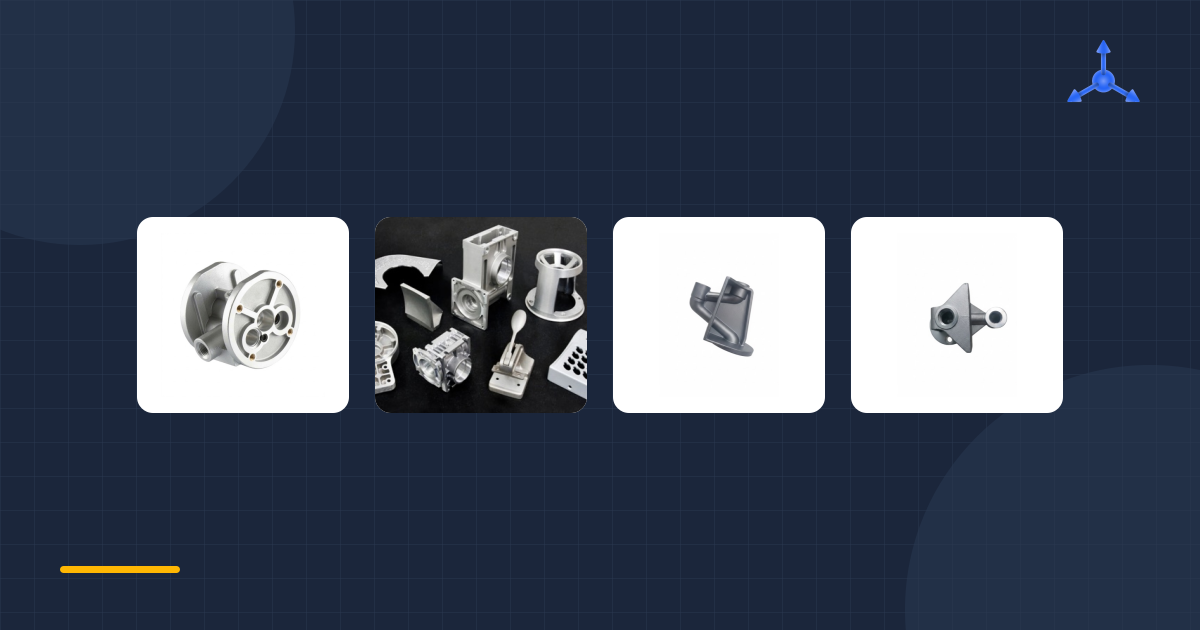
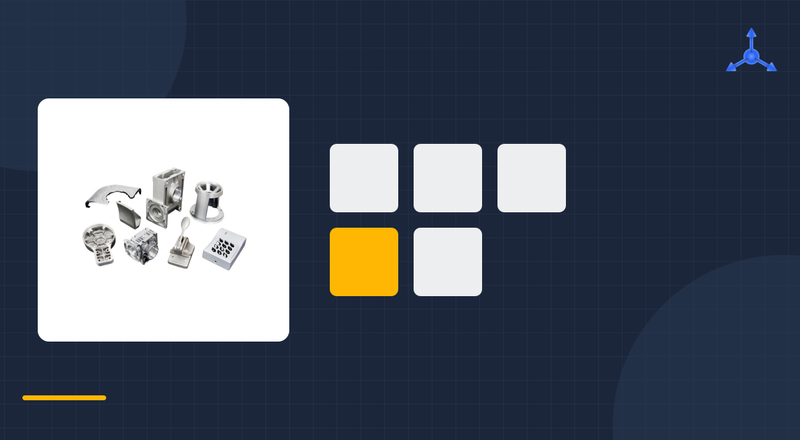
Aluminium die casting forces molten metal into a hardened steel mould under pressure, then trims, heat treats and machines the part as the drawing requires. The mould is the cost that decides everything else, which is why die casting suits repeat volume rather than a handful of parts.
The partner factories Vector Components represents cast zinc, aluminium and brass under pressure. Each behaves differently in the mould, and aluminium sits in the middle: lighter than brass for the same stiffness, less willing than zinc to fill a very thin section.
What Happens in One Die Casting Shot?
Metal is melted, metered, and injected into a steel mould at pressure. The mould is held closed against that pressure, the metal solidifies in seconds, the mould opens, and the part is ejected.
What comes out is not the finished part. It carries flash where metal escaped the parting line, the runner and gate system that fed the cavity, and often an overflow well that let the first metal through.
Those are trimmed off. Then, depending on the drawing, the part may be heat treated, machined on the faces that have to hold a dimension, and finished.
The whole sequence is fast once it is running. Everything slow about die casting happens before the first shot, in cutting the mould.
Which Features Have to Be Decided on the Drawing?
Wall section, draft angle and parting line. All three are drawing decisions, and all three are expensive to revisit.
Wall section decides whether the metal fills the cavity before it freezes. A section that is too thin in one place starves, and a section that is too thick elsewhere holds heat and shrinks.
Draft angle is the taper that lets the part leave the mould. Without it the part locks in, and adding draft afterwards means recutting steel.
The parting line is where the two halves of the mould meet, and it will be visible on the part. Choosing it deliberately puts the witness line somewhere harmless rather than across a sealing face.
There is an asymmetry worth knowing. Removing steel from a mould is straightforward; putting it back is not. So a change that removes material from the part is usually a mould modification, and a change that adds material to the part is usually a new mould.
When Does the Part Still Need Machining?
Where a feature has to hold a dimension or seal, which is usually fewer places than a first drawing assumes.
An as-cast surface is frequently acceptable. Cosmetic faces, non-sealing faces and anything that is simply structure often need nothing after trimming.
Threads, bores and sealing faces are different. Those are machined, and the processes available for the secondary operation are computer numerical control (CNC) lathe, CNC mill, casting and wire electrical discharge machining (EDM).
Vector selects the manufacturer for each part and process and coordinates the transfer of parts between factories. On a cast-then-machined part those are two operations and often two plants, so the handover is part of the quotation rather than an afterthought.
Deciding which features need machining at the drawing stage keeps the part on one route. Discovering it later is where the schedule goes.
Why Does Volume Decide Whether Die Casting Fits?
Because the mould is a hardened steel tool cut before any part exists, and its cost does not change with the order size.
That gives die casting a shape no other process has. The per-part cost is low and the entry cost is not, so the same tool spread across a year of production reads very differently from the same tool spread across fifty parts.
It also means the honest answer to "is die casting cheaper" is a question about quantity rather than about process. Casting or Machining: 6 Questions That Decide Which Is Cheaper at Your Volume works through that crossover properly.
Below the crossover, machining from solid or a lower-tooling casting route usually wins. Above it, nothing else comes close on a part that die casting can make.
What to Send for a Die Casting Quote
A drawing with the material and finish called out, the expected annual volume, and whether a tool already exists.
Volume is the figure that changes the answer most, so send the quantity you actually need rather than a round number. A tool quoted against ten thousand parts a year and used for five hundred is a bad outcome for everyone.
If a tool exists, say who owns it and where it is. That decides whether this is a tooling quotation or a parts quotation, and the two are not comparable.
Send computer-aided design (CAD) drawings and specifications, and a quotation follows within one business day. Quotations are free. Payment terms are NET 30.
Parts are made by the partner factories Vector represents. Vector does not own or run a factory, which is why the quotation names what the factory will do rather than what a sales department hopes it will.
Send the drawing and the annual quantity.
FAQs
What metals can be pressure die cast?
Zinc, aluminium and brass are the three the partner factories cast under pressure. Each behaves differently in the mould: zinc flows into thinner sections, aluminium is lighter for the same stiffness, and brass suits parts that need wear resistance at the sealing face.
Does a die cast part need machining afterwards?
Often only in places. The as-cast surface is frequently acceptable for cosmetic and non-sealing faces, while threads, bores and sealing faces are usually machined. Deciding which features need machining at the drawing stage keeps the part on one route instead of two, which is where the schedule usually slips.
Why is die casting tooling so much of the cost?
Because the mould is a hardened steel tool cut before any part exists, and its cost does not change with the order size. That makes volume the deciding factor: the same tool spread across a year of production reads very differently from the same tool spread across fifty parts.
What causes porosity in a die casting?
Air trapped as the metal fills the cavity, which is a gating and pressure question rather than a material fault. It matters most where a part has to hold pressure or be machined into, because a void that was harmless as-cast becomes a leak path once a bore opens it up.
Can the mould be modified after the first parts?
Removing steel from a mould is straightforward; adding it back is not. That asymmetry is why wall section, draft and parting line are settled on the drawing. A change that adds material to the part usually means a new tool rather than a modified one.
What do you need to quote a die cast part?
A drawing with material and finish called out, the expected annual volume, and whether tooling already exists. Send drawings and specifications and a quotation follows within one business day, at no cost. Volume is the figure that changes the answer most on a die cast part.
Related Reading

Carl Erickson
Founder and Chief Executive, Vector Components
Carl Erickson is a mechanical engineer and the founder and chief executive of Vector Components. He first went to Shenzhen in 2005 and spent more than fifteen years there building electromechanical products, managing factories and developing supplier networks. Vector Components brings nearly two decades of hands-on manufacturing experience in China to its customers in Canada and the United States.
About Carl EricksonRelated Signals