6 Ways to Control Fabrication Quality From Canada
 Carl EricksonLast Updated: Nov 12, 2026
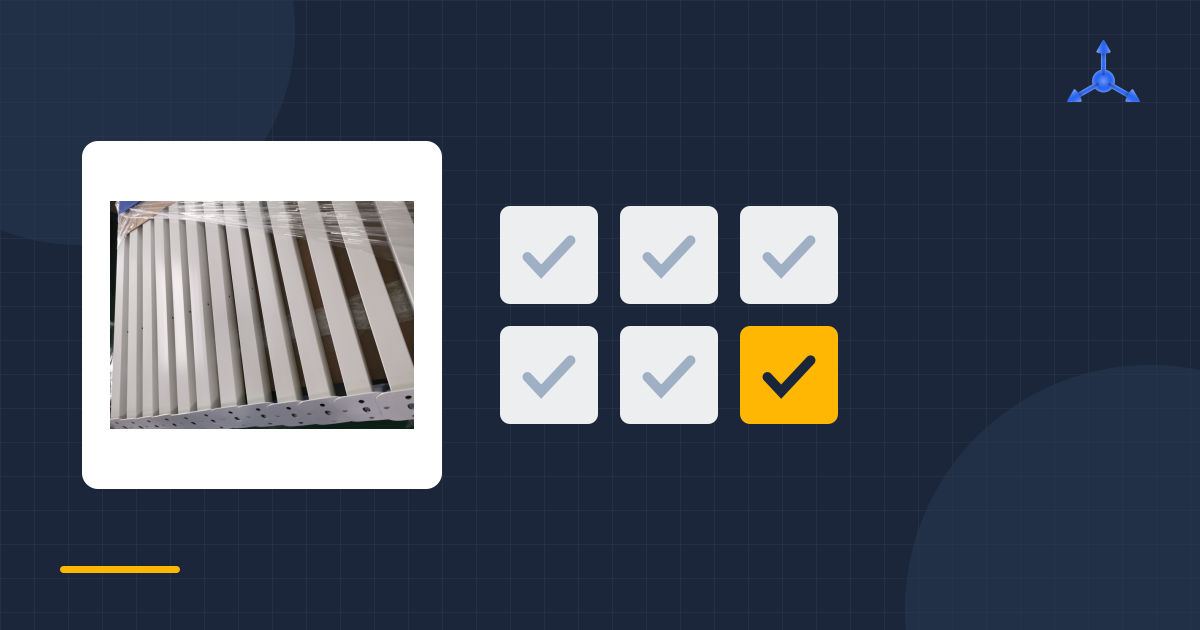
Controlling fabrication quality from Canada comes down to six levers: who holds the agreement with the factory, who speaks to the production engineer, whether subcontracting is visible, which factory makes which part, who carries legal obligations here, and who supervises inspection and shipping.
All six are contractual or human. None is a procedure, which is why a quality manual from a factory you have never visited tells you so little.
Who Holds the Agreement With the Factory?
Someone has to, or nothing else on this list is enforceable.
Vector Components is the authorized representative of several leading Chinese manufacturers of industrial components, supporting customers in the Canadian and United States markets. Each factory in the network has an agreement authorizing Vector to serve as its overseas sales department.
That agreement is the foundation. It is what makes a commitment about inspection, or a rejection, or a lead time, something other than an expression of hope.
A purchase order placed into a quoting portal has no equivalent. The order is real, but the relationship behind it may be a single transaction with a factory that has no particular reason to care about the next one.
Who Speaks to the Production Engineer?
The person who knows how the part will actually be made is the production engineer, and reaching them is a specific problem.
Vector's team works with the production engineers in their native language. Chinese engineers rarely speak English, and factory sales staff rarely have technical training.
Those two facts compound. A technical question sent in English arrives at a sales desk, is translated by someone without the vocabulary, and is answered by an engineer who received a different question from the one asked.
The answer that comes back is fluent and wrong, and nobody involved was careless. It shows up later as a part that satisfies the order and not the intent.
Is Subcontracting Visible?
Hidden subcontracting is the lever with the largest effect and the least visibility.
A factory that cannot make a part usually subcontracts it and adds a commission. That raises the price, and it causes quality and logistics problems the buyer never sees.
Nothing on the paperwork says it happened. The order went to one factory, the parts arrived, and two of the lines were made by a shop nobody vetted, chosen by a factory protecting its margin on work it did not want.
Vector selects the manufacturer for each part and process instead, and coordinates the transfer of parts between factories. The commission disappears because the subcontract does.
Asking the question directly is worth doing with any supplier. "Which of these lines will you make yourself?" has an answer, and reluctance to give it is informative.
Do You Know Which Factory Makes the Part?
Often not, and it is more knowable than buyers assume.
Chinese factories often trade under several names. The entity on a quotation, the entity on an invoice and the entity running the machine can be three different names belonging to the same group, or to arrangements between groups.
Buying through Vector means the buyer knows who makes the part. That matters most when something needs resolving, because a conversation about a specific part needs to reach the people who made it.
It also matters for the certificates. A certificate names an entity and a scope, and checking that the entity on it matches the entity making your part is a two-minute exercise that is frequently skipped.
Who Carries an Obligation You Can Enforce?
Vector Components is legally bound to adhere to North American business standards, which gives the buyer legal recourse a factory abroad does not.
That is a plain structural difference and worth understanding rather than taking on trust. A dispute with a supplier in your own jurisdiction is a commercial problem. A dispute with a factory abroad, in another legal system and another language, is frequently not worth pursuing at any realistic order value.
Payment terms contribute to the same thing. Terms are NET 30, which leaves a buyer in a different position on a disputed batch than payment against shipping documents does.
Canada is the first market and the United States second, which is a statement about where the commercial relationship is anchored.
Who Supervises Inspection and Shipping?
Vector supervises inspection, assembly, packaging and shipping.
The distinction worth holding onto is between a factory inspecting its own work and someone supervising that inspection. Both happen; they are not the same assurance.
What gets inspected, against which document, and at which stage are a set of decisions in their own right. Who Checks the Parts? 5 Quality Questions to Settle Before Manufacturing in China works through them rather than this page repeating it.
What to Settle Before the Order
Six questions, asked of any supplier:
- What agreement do you have with the factory making this?
- Who on your side speaks to the production engineer, and in what language?
- Which of these lines will you make yourself, and which will you place elsewhere?
- Which entity is making each part, and does it match the certificates?
- What obligations do you carry in my jurisdiction?
- Who supervises inspection, and at what stage?
A supplier who answers all six crisply is telling you a great deal. A supplier who answers none is also telling you something.
Send computer-aided design (CAD) drawings and specifications. A quotation follows within one business day, and quotations are free.
Send the drawing.
FAQs
How do I control quality on fabrication made overseas?
Through the levers that exist on your side: who holds the agreement with the factory, who speaks to the production engineer, whether subcontracting is visible, which factory makes which part, who carries an enforceable obligation here, and who supervises inspection before shipping. Procedures matter less than who is accountable for each.
What happens if the factory cannot make part of my order?
Usually it subcontracts the part and adds a commission, which raises the price and introduces quality and logistics problems the buyer never sees. Selecting the right factory for each part and process avoids that, and coordinating the transfer between them becomes someone else's job rather than yours.
Why does speaking the language matter for quality?
Because the person who knows how the part will be made is the production engineer, and Chinese engineers rarely speak English while factory sales staff rarely have technical training. A technical question routed through a sales desk comes back as an answer to a different question, which shows up later as a part that meets the order but not the intent.
What recourse do I have if the parts are wrong?
Vector Components is legally bound to adhere to North American business standards, which gives a buyer recourse that a factory abroad does not. Terms are NET 30 rather than payment against shipping documents, which also changes the position a buyer is in when something needs resolving.
How do I know which factory actually made my parts?
Chinese factories often trade under several names, so the name on a quotation is not reliably the name on the floor. Each factory in the network has a written agreement authorizing Vector as its overseas sales department, which is what makes the question answerable rather than awkward.
Do I need to visit the factory myself?
Many buyers never do. What matters is whether someone with technical training is talking to the production engineer in their own language and supervising inspection before shipping. A visit confirms that arrangement exists; it does not substitute for it, and it is the arrangement that holds between visits.
Related Reading

Carl Erickson
Founder and Chief Executive, Vector Components
Carl Erickson is a mechanical engineer and the founder and chief executive of Vector Components. He first went to Shenzhen in 2005 and spent more than fifteen years there building electromechanical products, managing factories and developing supplier networks. Vector Components brings nearly two decades of hands-on manufacturing experience in China to its customers in Canada and the United States.
About Carl EricksonRelated Signals