Who Checks the Parts? 5 Quality Questions to Settle Before Manufacturing in China
 Carl EricksonLast Updated: Nov 12, 2026
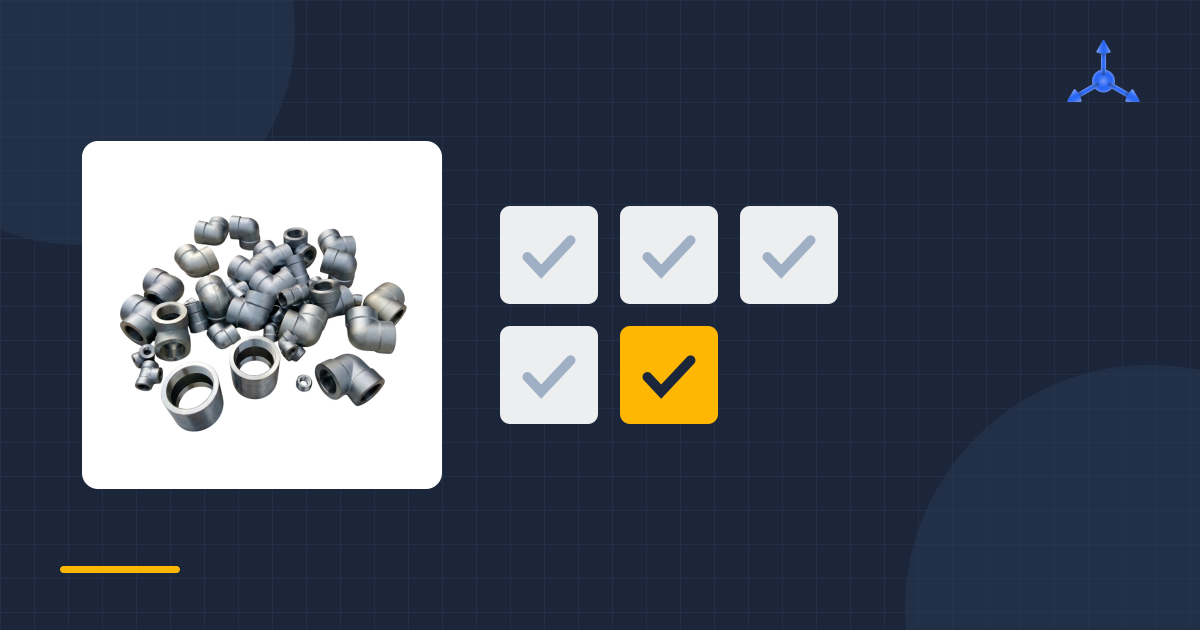
Five questions settle the quality regime before production starts: who inspects, against which document, at which stage, which certificates apply, and who can reject a batch. Vector Components supervises inspection, assembly, packaging and shipping, and the partner factories hold certification covering the processes they run.
These are questions for an order that already exists with a supplier you have already chosen. Vetting the supplier in the first place is a different exercise, covered in 9 Ways to Verify a Chinese Supplier Before You Place an Order.
Who Actually Performs the Inspection?
The factory's own inspectors check their own work, and that is not the same as independent supervision.
Every serious factory inspects. It has to: scrap found internally is cheaper than scrap found by a customer. But an inspector employed by the factory, reporting to the factory, is measuring against the factory's reading of the drawing.
Vector supervises inspection, assembly, packaging and shipping. It also selects the manufacturer for each part and process and talks directly with the engineers in charge, which is what makes supervision substantive rather than a signature.
Vector's team works with the production engineers in their native language. An inspection finding discussed with the engineer who caused it gets resolved differently from one relayed through a sales desk.
Against Which Document?
Whatever the order names, which is why naming it matters more than anything else on this list.
A drawing revision, a written specification, or a sampling plan all work. "The drawing" does not, because the factory will inspect against the copy it holds, and that copy may predate a change you agreed during sampling.
Put the revision number on the purchase order. Not in the covering email, not in the thread where it was agreed, on the order.
Acceptance criteria belong in the same place. A dimension with a tolerance is a criterion. A surface that should be "clean" is not, and it will be interpreted by someone who has never seen your assembly.
At Which Stage?
At the point where a defect is still cheap to act on, which varies by part.
First article, before the run commits. One part measured feature by feature against the drawing. It is real work and it is where a misread drawing surfaces while it costs one part.
In process, to catch drift. A tool wears, a fixture shifts, and the hundredth part differs from the first in a way nobody chose.
Final, before shipping. Necessary, and the most expensive place to find anything, because the part is finished and the schedule is committed.
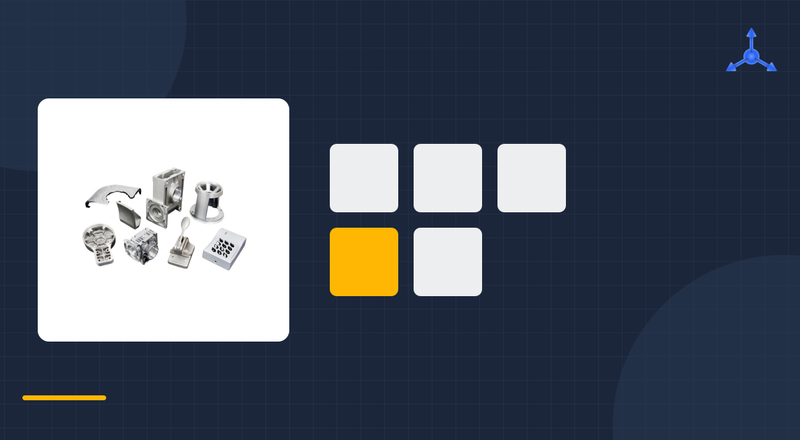
Some parts have a stage that matters more than all three. A casting should be checked before its machining allowance is cut away, because a void under the surface is cheap to reject at the foundry and expensive after a machining operation has been paid for.
On an assembly the stage matters more than the activity, and Custom Fabricated Assemblies: 7 Things to Settle Before Production Starts covers that case.
What Certification Do the Factories Hold?
The partner factories hold International Organization for Standardization (ISO) 9001, International Automotive Task Force (IATF) 16949 and ISO 14001 certificates. The coverage spans computer numerical control (CNC) machining, pipe fittings and flanges, and investment casting.
Those certificates belong to the factories. Vector Components holds no certification of its own, and that distinction is worth insisting on with any representative or trading party, because blurring it is common and easy.
A certificate also covers a defined scope and a named entity, valid until a date. "ISO 9001 certified" on its own is a claim rather than a specification.
So ask three things: which legal entity the certificate names, which processes and sites fall inside its scope, and when it expires. Then check the entity against the one quoting your part, because Chinese factories often trade under several names.
A factory that answers those quickly is telling you something about how it is run, independently of what the certificate says.
Who Can Reject, and What Then?
Name the person and the route before production, because afterwards it is a negotiation.
Authority to reject sounds obvious until a batch is marginal. Someone has to be able to say no, and that someone needs to be identified on your side and acknowledged on the supplier's.
Then the route. Rework, replacement, or credit, and who pays the freight either way. Agreeing it in advance costs one sentence; agreeing it during a dispute costs considerably more.
Vector Components is legally bound to adhere to North American business standards, which gives the buyer legal recourse a factory abroad does not. Payment terms are NET 30, which also affects the position on a disputed batch.
One structural point: a factory that subcontracted a part it could not make is harder to hold to a rejection, because the party that made it has no relationship with you. A factory that cannot make a part usually subcontracts it and adds a commission, which is why knowing who made each part belongs in the quality conversation and not just the commercial one.
The Five Questions, Before the Order
On the purchase order, not in correspondence:
- Who inspects, and who supervises that inspection.
- Against which document, by revision number, with acceptance criteria stated.
- At which stage, including any stage specific to the process.
- Which certificates apply, naming entity, scope and expiry.
- Who can reject, and what happens next.
Send computer-aided design (CAD) drawings and specifications with the acceptance criteria. A quotation follows within one business day, and quotations are free.
Send the drawing and the acceptance criteria.
FAQs
Who inspects parts manufactured in China?
The factory's own inspectors check their own work, and that is not the same as independent supervision. Vector Components supervises inspection, assembly, packaging and shipping, and its team deals with the production engineers directly rather than through a sales desk, which is where inspection findings usually get softened.
What standard are parts inspected against?
Whatever the order names, which is why naming it matters. A drawing revision, a written specification, or a sampling plan all work; "the drawing" without a revision does not, because the factory will inspect against the copy it holds. Put the revision on the purchase order rather than in correspondence.
When should parts be inspected?
At the stage where a defect is still cheap to act on. A first article before the run commits the process, in-process checks catch drift, and final inspection catches everything too late to fix economically. A casting checked before its machining allowance is cut is far cheaper to reject than one checked after.
Are the factories certified?
The partner factories hold ISO 9001, IATF 16949 and ISO 14001 certificates, with coverage across computer numerical control machining, pipe fittings and flanges, and investment casting. Those certificates belong to the factories rather than to Vector Components, and each covers a defined scope, so ask which entity and which scope a certificate names.
What happens if a batch fails inspection?
That depends entirely on what was agreed beforehand, which is why it is one of the five questions. Name who holds authority to reject and what follows: rework, replacement, or credit. Vector is legally bound to North American business standards, which gives a buyer recourse a factory abroad does not.
Does a certificate of conformity mean the parts are right?
It means someone signed a document saying so. Its value depends on what it references: a named drawing revision and stated acceptance criteria make it meaningful, while a generic statement of conformity to an unnamed standard does not. Specify what the certificate has to reference before production starts.
Related Reading

Carl Erickson
Founder and Chief Executive, Vector Components
Carl Erickson is a mechanical engineer and the founder and chief executive of Vector Components. He first went to Shenzhen in 2005 and spent more than fifteen years there building electromechanical products, managing factories and developing supplier networks. Vector Components brings nearly two decades of hands-on manufacturing experience in China to its customers in Canada and the United States.
About Carl EricksonRelated Signals